Inspection & Diagnosis — Find Out What's Really There
Not sure what's in your roof? An evidence-based inspection is where every recommendation begins. We inspect the accessible areas of your property, identify what's actually causing the activity and how it's getting in, then recommend the right next step — diagnosis before any solution.
Pricing & booking
Inspection / call-out
$382 incl GSTAny further work is priced or quoted before it begins. If you don't proceed, only the inspection/call-out is payable.
Book an InspectionWhy an Inspection Comes First
Most roof problems share the same signs. Scratching can be possums, rats, mice, birds or something else entirely — and treating the wrong cause means the problem continues. An inspection establishes what's actually there before any work is recommended.
The cause isn't always what you assume
Roof noises overlap between possums, rodents and other causes. An inspection looks for the physical evidence that confirms what's present rather than relying on the sound alone.
Access matters as much as the animal
Finding how the animal is getting in is what makes a solution permanent. The inspection identifies the entry points and access opportunities, not just the animal.
What an Inspection Covers
The standard inspection assesses the accessible areas of the property for evidence of possum or rodent activity and potential access. Not every area can be safely reached.
External perimeter
The building perimeter is inspected for potential entry points, evidence of activity and access opportunities.
External roof
Accessible exterior roof areas are assessed where safe to do so.
Internal roof void
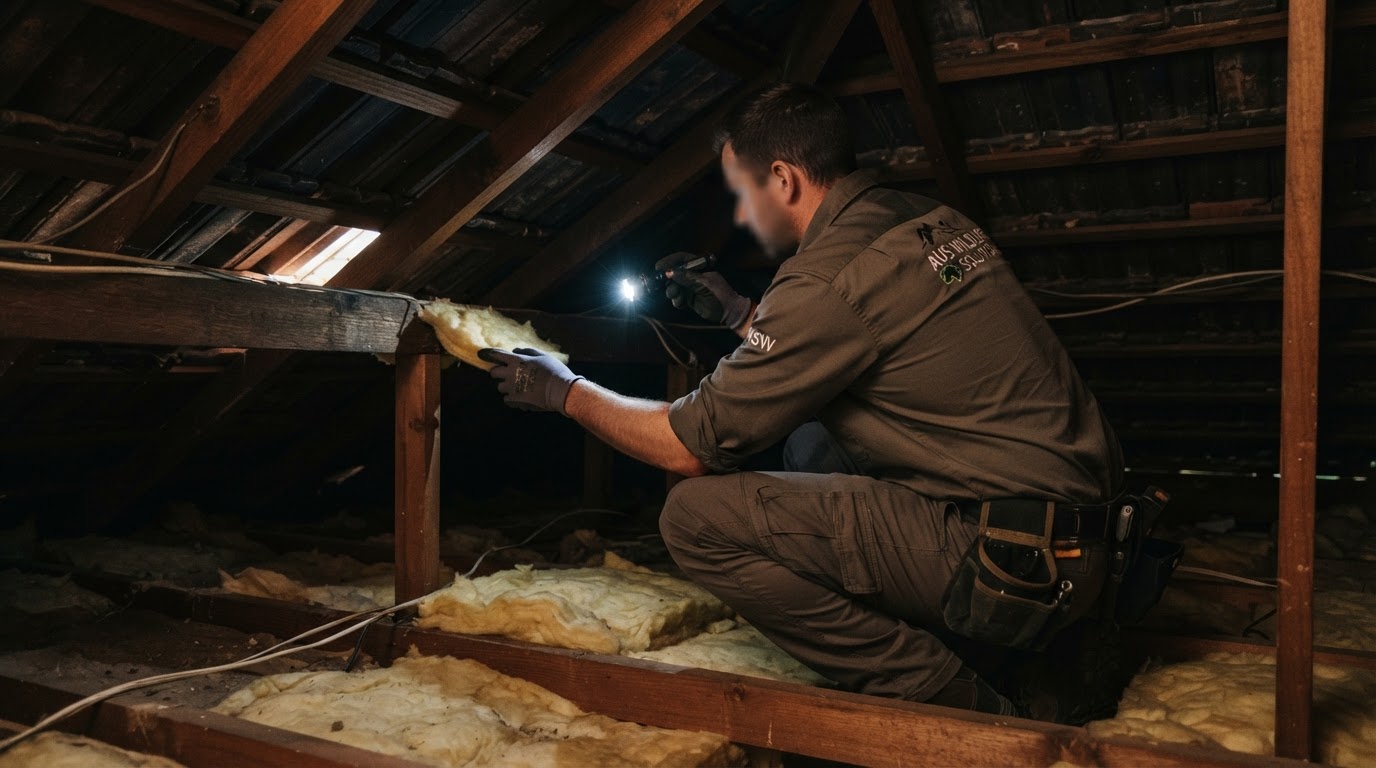
Where there is a safe, accessible manhole, the internal roof void is inspected for evidence of activity.
Where an area cannot be safely or physically accessed, it cannot be fully inspected. The inspection is limited to areas that can be safely reached.
Diagnosis Before Recommendation
We don't start with a service — we start with understanding the problem. The inspection findings are correlated with what you've reported before any recommendation is made.
Evidence over assumption
Droppings, damage, runs, nesting material and entry points are assessed together rather than relying on any single sign.
A clear recommendation
You receive an evidence-based recommendation and, where further work is needed, a quote or estimate before any work begins.
You stay in control
There's no pressure to proceed. If you don't proceed after the inspection, only the inspection/call-out is payable.
Our Inspection & Diagnosis Approach
The Possum Man uses a systematic diagnostic process. Rather than diagnosing from one sound, we consider the overall pattern — what you're experiencing, the physical evidence and the building conditions — before recommending a solution.
- Step 1
Listen
We start with what you have been experiencing — where the activity is occurring, what it sounds like, when it happens and any other signs you have noticed.
- Step 2
Interpret
We consider whether the reported signs are consistent with possums, rodents or another cause before inspecting.
- Step 3
Investigate
We inspect the external perimeter, external roof and internal roof void where safely and physically accessible, looking for evidence and access opportunities.
- Step 4
Correlate
We compare what you have reported with the physical evidence and building conditions rather than relying on any single sign.
- Step 5
Diagnose
We identify the most likely cause of the activity and the access or entry points that need to be addressed.
- Step 6
Resolve
We explain the recommended next step and, where approved and appropriate, carry out the work — or quote any further work before it begins.
What Happens After the Inspection
Following the inspection, you receive a clear explanation of what was found and a recommended next step. Any further work is priced or quoted before it begins.
- Step 1
We explain what we found
You receive a clear, evidence-based explanation of what's causing the activity and how it's accessing the building.
- Step 2
We recommend the next step
Where further work is appropriate, we recommend the right service for what's actually present — not a predetermined package.
- Step 3
Further work is quoted first
Any additional or more complex work is priced or quoted before it starts, so you can decide with clear information. If you don't proceed, only the inspection/call-out is payable.
Common Questions About the Inspection
Answers to some of the questions we hear most often about the inspection.
Related Guidance
Educational articles to help you understand what might be causing the activity before you decide.
How to Tell Possums and Rats Apart by Sound
The noises, timing and location that separate possums from rodents in your roof.
Read articleWhat Scratching in the Roof Really Means
The most common causes of scratching noises — and which ones need urgent attention.
Read articleWhy Possum Exclusion Is the Foundation of Long-Term Possum Control
Why removing an animal without sealing entry points guarantees the problem returns.
Read articleAsk Kate Before You Book
Not sure whether you need an inspection? Ask Kate — our Possum & Rodent Diagnosis Assistant, here to help you understand your likely problem before you decide what to do next.
Ask Kate about the sounds you're hearing, the signs you've noticed and what they might mean. She draws on the same specialist knowledge as our inspectors, so the guidance you get is consistent with everything on this site.
Booking remains the fastest way to get a confirmed diagnosis — Kate is here to help you get there with confidence.
Ready to Find Out What's Really in Your Roof?
Booking an inspection is the natural next step. You don't need a diagnosis — that's what the inspection is for. We'll inspect the accessible areas, diagnose what's there and explain the right next step, then you decide what to do.
No pressure, no assumptions — just an evidence-based diagnosis and a clear recommendation. You stay in control the whole way.